
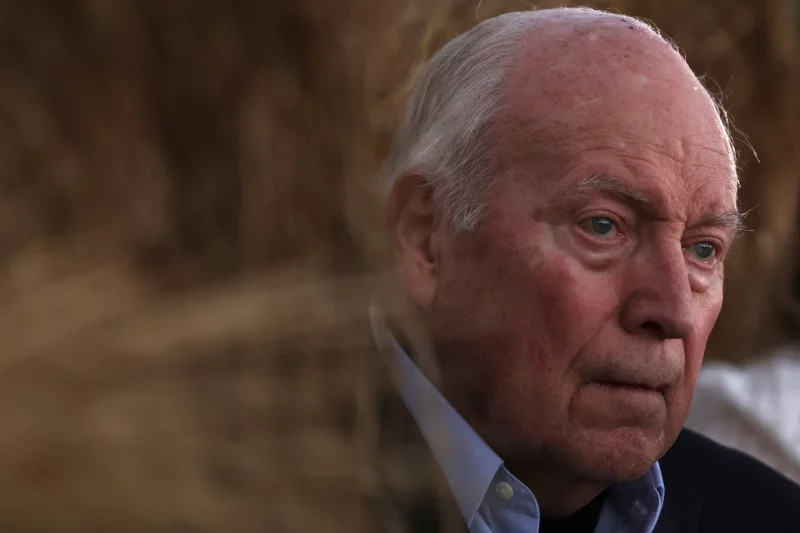
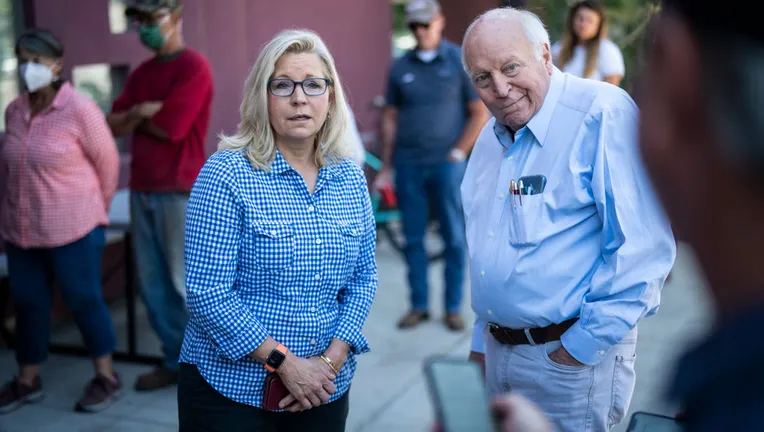
 Dick Cheney is a name that evokes strong opinions across the United States and around the world. Known for his long-standing influence in American politics, Cheney’s career has been marked by power, controversy, and resilience. From serving as the 46th Vice President under George W. Bush to his enduring presence in conservative politics, Dick Cheney remains a figure whose life story is both compelling and polarizing.
Early Life and Political Beginnings
Born Richard Bruce Cheney on January 30, 1941, in Lincoln, Nebraska, Dick Cheney grew up in a modest family. His early years shaped the disciplined and strategic mind that would define his political career. Cheney moved with his family to Casper, Wyoming, where he attended high school and displayed early signs of leadership and ambition.
After high school, Dick Cheney attended Yale University briefly before transferring to the University of Wyoming, where he earned a Bachelor’s degree in political science. His time in Wyoming exposed him to conservative politics, setting the stage for a career that would span decades and include some of the most powerful positions in the U.S. government.
Rise to Political Power
Dick Cheney began his political career in the early 1960s, working as an intern for Congressman William A. Steiger. By the 1970s, Cheney had made a name for himself as a policy strategist and legislative aide. His sharp mind and strategic acumen led him to hold several key positions, including:
- White House Chief of Staff under President Gerald Ford (1975–1977)
- U.S. Representative from Wyoming (1979–1989)
- Secretary of Defense under President George H.W. Bush (1989–1993)
During these roles, Dick Cheney developed a reputation as a skilled operator behind the scenes. As Secretary of Defense, he oversaw U.S. military operations during the Gulf War, solidifying his reputation as a strong advocate for American military power.
Vice Presidency Under George W. Bush
The pinnacle of Dick Cheney’s career came when he served as Vice President under President George W. Bush from 2001 to 2009. Cheney played a crucial role in shaping U.S. domestic and foreign policy, particularly after the September 11, 2001, terrorist attacks. His tenure as vice president was marked by:
- Strong advocacy for the Iraq War
- Shaping the U.S. response to terrorism
- Promoting conservative economic policies
- Significant influence in national security decisions
While many praised Dick Cheney for his experience and strategic vision, his tenure was not without controversy. Critics accused him of expanding executive power and playing a central role in the Iraq invasion, sparking debates that continue today.
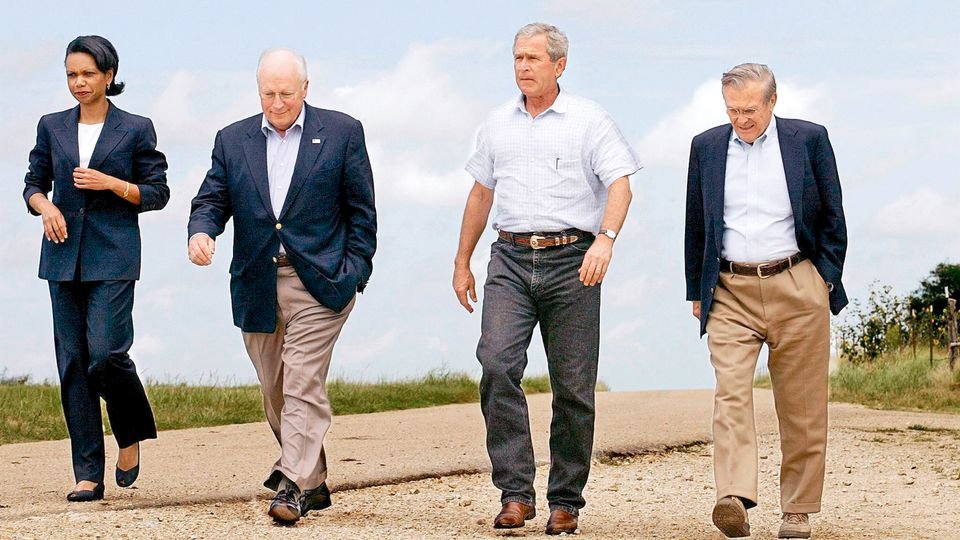
US President George W. Bush (2nd-R), US Vice President Dick Cheney (2nd-L), US Secretary of Defense Donald Rumsfeld (R) and National Security Advisor Condoleezza Rice (L), walk out to speak to reporters 23 August 2004 at Bush’s Crawford, Texas ranch. The group is at the ranch for Bush’s Defense Policy and Program Teams meeting held annually at the ranch.
Personal Life
Dick Cheney’s personal life has also attracted public interest. He married Lynne Cheney in 1964, and the couple has two daughters: Mary Cheney and Liz Cheney. Liz Cheney, in particular, has made headlines as a political figure, carrying on the family’s influence in conservative politics.
Cheney has faced several health challenges over the years, including multiple heart attacks and a heart transplant in 2012. These health struggles, coupled with incidents like the infamous 2006 hunting accident involving Harry Whittington, have kept him in the public eye.
Controversies
Throughout his career, he has been involved in a number of controversies, fueling public debate:
- Iraq War: Cheney’s advocacy for the Iraq invasion remains a contentious topic.
- Enhanced Interrogation Techniques: He supported policies now widely criticized as torture.
- Hunting Accident: In 2006, Cheney accidentally shot a friend, Harry Whittington, during a hunting trip.
- Health Transparency: His numerous heart procedures, including a transplant, raised questions about transparency in public service.
These controversies have cemented Dick Cheney’s reputation as a polarizing figure in modern U.S. history.
Net Worth and Legacy
Despite criticism, his’s influence in politics and business is undeniable. His net worth, bolstered by decades in high-level government roles and corporate boards such as Halliburton, is estimated to be significant. Today, Dick Cheney continues to be cited in discussions about U.S. foreign policy, executive power, and the conservative movement.
| Achievement/Work | Year | Notes |
|---|---|---|
| U.S. Representative from Wyoming | 1979–1989 | Served five terms in Congress |
| White House Chief of Staff | 1975–1977 | Under President Gerald Ford |
| Secretary of Defense | 1989–1993 | Oversaw Gulf War operations |
| Vice President of the United States | 2001–2009 | Served under George W. Bush, influential in Iraq War decisions |
| Halliburton Board Member | 1995–2000 | Corporate leadership and advisory roles |
| Author | 2011 | Published memoir “In My Time” |
Dick Cheney’s Impact on Politics
Dick Cheney’s influence is felt in multiple areas: military policy, national security, and conservative political strategy. Even after leaving office, he remains a sought-after commentator on U.S. foreign policy and executive power. Figures like his daughter Liz Cheney continue to make waves politically, ensuring the Cheney legacy remains relevant.
Health and Cause of Death Speculations
As of now, Dick Cheney is alive, though rumors and questions about Dick Cheney’s cause of death and whether Dick Cheney died have circulated widely online, likely fueled by his advanced age and past health issues. Cheney has undergone multiple heart procedures, including a heart transplant, which has led many to question his longevity.
For reference, common questions include:
- How did Dick Cheney die? – He is alive; no death reported.
- Dick Cheney heart transplant: Completed in 2012, prolonging his life.
- Dick Cheney hunting accident: Occurred in 2006 with Harry Whittington.
Dick Cheney’s Family and Personal Legacy
- Lynne Cheney: Wife and influential author/political figure.
- Mary Cheney: Daughter, active in private sectors.
- Liz Cheney: Daughter, U.S. Representative, politically active.
The Cheney family remains intertwined with American politics, with his at the center of the family’s historical influence.
Q1: Who was Dick Cheney Vice President for?
A1: He served as Vice President for President George W. Bush from 2001–2009.
Q2: Did Dick Cheney die?
A2: No, he is still alive.
Q3: What is Dick Cheney’s net worth?
A3: Estimates place his’s net worth in the range of $50–75 million, thanks to his political and corporate roles.
Q4: What happened in Dick Cheney’s hunting accident?
A4: In 2006, he accidentally shot Harry Whittington while hunting in Texas.
Q5: How old is Dick Cheney?
A5: Born January 30, 1941, he is 84 years old as of 2025.
Q6: Who is Dick Cheney’s daughter?
A6: He has two daughters, Mary Cheney and Liz Cheney, both politically and socially influential.
Q7: Did Dick Cheney have a heart transplant?
A7: Yes, in 2012, he received a heart transplant due to longstanding heart issues.
His’s life is a mix of political brilliance, controversy, and personal resilience. From his early days in Wyoming to the highest echelons of American power, Cheney has influenced policies, shaped political debate, and left an indelible mark on U.S. history. His family continues to carry the Cheney legacy forward, keeping the name relevant in politics and public discourse. Whether admired or criticized, he remains one of the most recognizable figures in modern American politics.
Stay updated with us at StarProfileHub for more inspiring Hollywood journeys like Dick Cheney’s and the latest celebrity stories.