
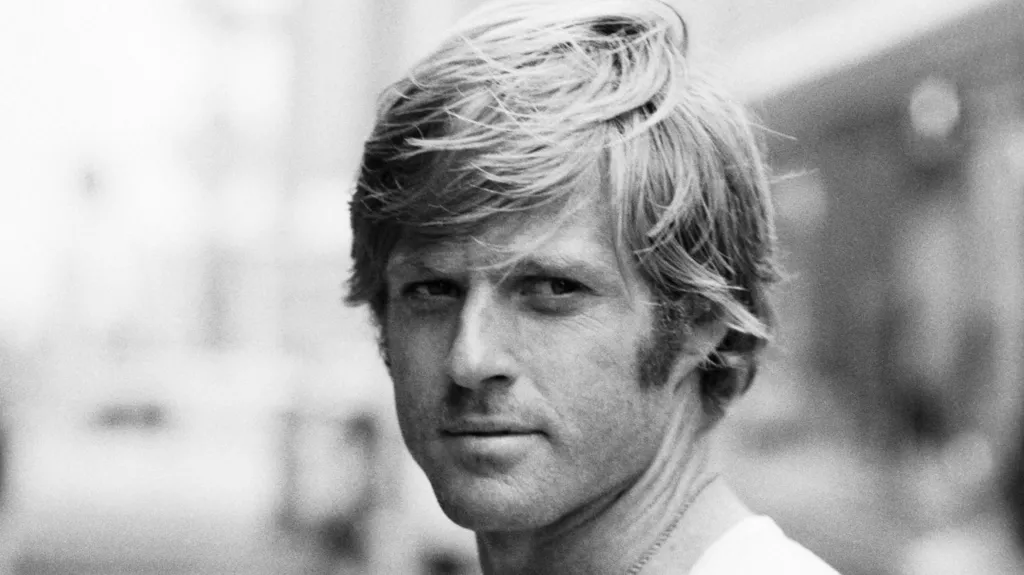
American actor and Filmmaker Robert Redford died at the age of 89, who has appeared in more than 50 Hollywood movies and also won different awards, including five Golden Globes for Best Picture, a BAFTA Award, and won seven Oscars, including Best Director. He was also named in the top 100 most influential people in the world by the popular news magazine The New York Times in 2014.
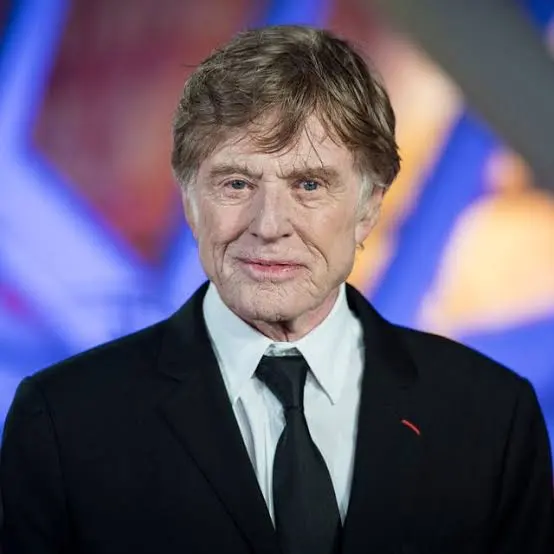
He founded the Sundance Film Festival, which became the heartbeat of independent filmmaking. His blend of screen charisma, political conscience, and dedication to creative freedom made him a rare figure in American culture, a star who always looked beyond his own fame.
Robert Redford Early life
Charles Robert Redford Jr. was born on 18 August 1936 in Santa Monica, California, United States. His father worked as a milkman before becoming an accountant for Standard Oil, while his mother died at a young age.
While he was in school, he got arrested for taking a borrowed car that contained stolen jewellery. Despite all these incidents, he won a scholarship to the University of Colorado because of his athletic ability.
But his mother died at just 40 years old, this tragedy struck again, and he got into heavy drinking, and he was expelled from the University after 18 months.
He worked in the California Oilfields before moving to Europe, where he studied art in Paris and Florence. His temporary stays in Europe gave him a new perspective on the United States.
“I began to look at my country from another point of view,” Robert Redford once said, reflecting on how travel and art shaped his sense of identity.
After he returned to the United States, he enrolled at the American Academy of Dramatic Art in New York with the initial intention of becoming a theatrical designer, but he switched to acting later.
In the 1950s, Redford began his acting career with small roles in television shows like Perry Mason, Dr. Kildare, and The Untouchables. He debuted on the big screen in 1959 with a small role in the Tall Story, where he worked with the talented actress Jane Fonda.
However, it was not his starting point for a film career. The film flopped, but Time Magazine gave the opinion that “Nothing can save these pictures”. Fonda and Robert Redford became friends and later fell in love with each other, and started working together at that time.
He also worked in one of the popular American romantic comedies on Broadway in 1961. On the stage, he found early success as pompous lawyer Paul Bratter in Neil Simon’s romantic comedy Barefoot in the Park, which was reprised with Fonda in the 1967 version.
In 1965, he won the Global Award for Most Promising Newcomer because of his role in the film Daisy Clover, where he shared the screen with Natalie Wood. But Hollywood often judged him by his appearances. He was famously turned down for The Graduate because director Mike Nichols thought that he was “too good-looking” to play the awkward Benjamin Braddock.
Still, Robert Redford’s aura was undeniable, as told by Fonda, “There was always a mystery because he didn’t reveal anything. He has got an aura about him”.

Redford found his niche that he was searching in Butch Cassidy and the Sundance Kid, which is written by William Goldman, in this film he worlds with Paul Newman’s fast-taking Butch. This film became a huge success and Robert Redford won Global Fame in 1969. Reford and Paul Newmen is considered as one of the great partnerships.
This partnership carried into The String(1973), a slick con-artist drama that won seven Academy Awards, including best picture and helped Redford to get an Oscar nomination for acting but the best actor award was won by Jack Lemmon.
During the 1970s, Robert Redford started working on a series of high-profile films to build his reputation:
- The Way We Were(1973), alongside Barbra Streisand.
- The Great Gatsby(1974), as F. Scott Fitzgerald’s enigmatic Jay Gatsby.
- All the President;s Men(1976), portraying Washington Post reporter Bob Woodward in the Watergate saga.
In 1976 Redford worked on the Woodward in the partnership with Dustin Hoffman as character Bernstein. This film got huge success and won four Oscars Awards which included the best screenplay and the best supporting actor for Jason Robards.
All these roles of Rodford’s shows the ability to balance the romance, intrigue, and political urgency that set him apart from his contemporaries.
After a four-year break, he made a bold decision to debut in direction with Ordinary People, a great story of a middle-class family portraying how they collabs after the death of one of their sons. This movie gave only one Oscar Award as Best Director for Robert Redford. Proving his ability to work in both acting and direction.

After the grand success of this direction journey, he began to work on the direction of more notable films:
- A River Runs Through It(1992), which gave a young Brad Pitt his breakout role.
- Quiz Show(1994) was nominated for four Oscars.
- The Horse Whisperer(1998), blending drama with the landscapes Redford loved
Wealth always comes with fame. Redford spent his wealth buying a ski resort in Utah for his wife, Lola. He renamed it Sundance in remembrance of one of his most famous roles.
Robert Redford founded the Sundance Institute in 1981 to support independent filmmakers and the Sundance Film Festival, which is held annually in Park City, Utah. Over time, the festival became one of the key festivals for filmmakers around the world to showcase the work of many directors and filmmakers.
Sundance Institute launches the careers of filmmakers such as Quentin Tarantino, Steven Soderbergh, and Ava DuVernay.
In acting terms, there were some hits and misses over the decades of the 20th Century. This also changed how Hollywood approaches distribution, proving that independent films could reach mainstream audiences and win awards.
He often said, “Independent film is about taking chances.”
Even though he primarily focused on Sundance, he continued acting.
Out of Africa (1985) is a sweeping romance that won seven Oscars.
Sneakers (1992) is a witty thriller about hackers and espionage.
All Is Lost (2013) is a near-wordless survival drama that many critics hailed as one of his finest performances.
Captain America: The Winter Soldier (2014), where he played S.H.I.E.L.D. agent Alexander Pierce, surprising fans with a turn in the Marvel universe.

His final starring role came in The Old Man & the Gun (2018), though he briefly returned for a cameo in Avengers: Endgame (2019) and even appeared in the TV series Dark Winds.
Behind the glamour, Robert Redford endured profound personal losses. He married Lola Van Wagenen in 1958, and the couple had four children. Tragically, their infant son Scott died of sudden infant death syndrome. Another son, David, battled liver disease and died in 2020.
Redford later married German artist Sibylle Szaggars in 2009. Despite his fame, he preferred private life in Utah, far from Hollywood’s glare.
He often admitted that his good looks felt more like a curse than a gift, saying that karma had punished him with family tragedies to balance his outward fortune.
Throughout his career, Robert Redford was outspoken on environmental issues, Native American rights, and progressive politics. He campaigned against overdevelopment in the West and pushed for stronger climate protections.
“Ours is a sick planet because of our behavior on it,” he declared in 2014.
His activism wasn’t performative; it was deeply rooted in his sense of responsibility as a citizen and artist. He co-founded The Redford Center with his son, James, to fund environmental documentaries and continued to speak out, even in his final years.
Following his death, tributes poured in from across the world. Actors like Jane Fonda and Meryl Streep praised not only his artistry but also his generosity and integrity. Filmmakers credited Sundance with giving them their first break.
Robert Redford’s legacy lies in three intertwined achievements:
As an actor, he defined an era of Hollywood charm mixed with intelligence.
As a director, he proved that intimate stories could resonate as powerfully as blockbusters.
As a cultural builder, he established institutions that enabled independent voices to thrive.
His life reminds us that true stardom isn’t about personal fame, it’s about the opportunities you create for others.
Robert Redford’s passing marks the end of an era, but his work continues to breathe life into cinema. From his unforgettable roles in Butch Cassidy and the Sundance Kid and All the President’s Men to his Oscar-winning direction and his founding of Sundance, Redford redefined what it means to be a Hollywood star.
He leaves behind films that will be watched for generations, a festival that continues to elevate independent voices, and a legacy of activism that blends art with responsibility.
As audiences revisit his performances and as new filmmakers walk through the doors Sundance opened, Robert Redford’s influence will remain as radiant as ever, proof that some stars never fade.