
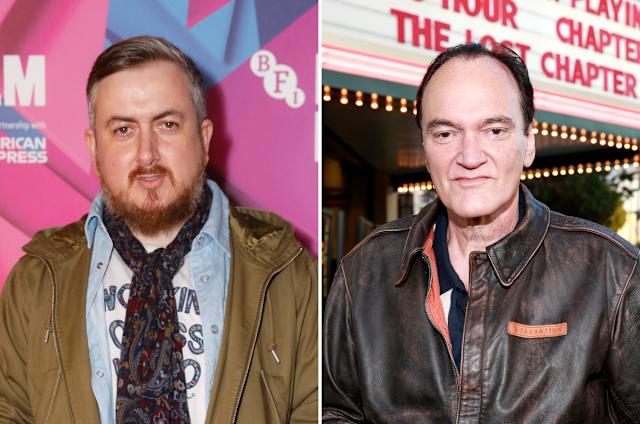
When Welsh indie director Jamie Adams embarked on the journey to create Only What We Carry, he had no way of predicting the buzz it would generate — particularly due to the involvement of Quentin Tarantino, one of cinema’s most iconic directors and screenwriters. Known primarily for his groundbreaking work behind the camera, Tarantino’s decision to appear on-screen in a significant acting role added both prestige and curiosity to the project. The film was ambitiously shot over just six days in the picturesque town of Deauville, France, a setting that lent a quiet yet cinematic backdrop to the intimate drama.
Beyond Tarantino, the ensemble cast includes Simon Pegg, Charlotte Gainsbourg, Sofia Boutella, Liam Hellmann, and the emerging talent Lizzy McAlpine, whose feature debut adds a fresh dynamic to the storytelling. The combination of a high-profile icon like Tarantino and an eclectic, international cast has made film enthusiasts eager to understand both the production process and the nuances of Tarantino’s role.
In an exclusive conversation with Adams, he discussed the unique challenges of directing a film in such a compressed timeframe. Shooting a full-length feature in six days required intense planning, improvisation, and trust in the actors’ instincts. Adams revealed that working with Quentin Tarantino, who is often considered a perfectionist behind the camera, required a delicate balance of creative freedom and structured guidance. The director emphasized that Tarantino’s energy, curiosity, and experience brought a rare depth to the set, inspiring both the cast and crew. This insight offers audiences a rare glimpse into how an indie director navigates working with a legendary filmmaker while maintaining his own vision.
The story of Only What We Carry is as fascinating as the film itself. Adams’ ability to persuade Quentin Tarantino to take on one of his most visible acting roles in years demonstrates both his confidence and the compelling nature of the script. For Tarantino, the project represented an opportunity to explore performance in a new context, collaborating with an ensemble cast in an unconventional, improvisational filmmaking environment. Adams’ reflections underscore the intersection of indie filmmaking flexibility with Tarantino’s iconic presence, illustrating how passion projects can attract even the most established artists.
A Director’s Dream: The Genesis of Only What We Carry
Jamie Adams didn’t initially set out to direct Quentin Tarantino; instead, the project began as a personal journey fueled by stories he had long kept tucked away. Years of studying film, analyzing cinematic greats, and honing his craft provided the foundation for his approach, but it was the perspective gained from becoming a father that gave the project its emotional urgency. Adams realized that the stories he wanted to tell were not conventional; they were intimate, reflective, and rooted in human experience. That nontraditional quality is what ultimately drew him to create Only What We Carry, a film designed to explore vulnerability, connection, and the subtle complexities of human relationships. (nz.news.yahoo.com)
“In my 20s, you study all these great artists — you admire them, you worship them,” Adams said, reflecting on how time and life experiences reshape artistic priorities. He referenced filmmakers such as Woody Allen and Stanley Kubrick, acknowledging their technical brilliance while emphasizing how personal growth can shift one’s creative focus. This evolution of perspective led him to develop a narrative style for Only What We Carry that prioritizes character-driven storytelling and emotional truth over strict plotting or formulaic structure. By allowing the story to emerge organically through the actors’ interactions, Adams created space for authenticity and subtlety, a method particularly suited for performers who bring their own cinematic knowledge to the table.
From the outset, Adams envisioned a film that felt lived-in — one that captured the nuances of love, loss, and courage with naturalistic performances. To achieve this, he embraced a highly collaborative approach, encouraging actors to bring their own interpretation and depth to each scene. This method aligned perfectly with the presence of Quentin Tarantino, whose lifelong immersion in cinema and deep understanding of performance allowed him to contribute insightfully to the character development process. Tarantino’s experience as both a director and actor made him especially adept at navigating improvised moments while maintaining narrative coherence, adding a unique layer to the ensemble’s dynamic. By combining Adams’ vision with Tarantino’s expertise, the film cultivated a rare authenticity rarely seen in traditional scripted productions.
Convincing Quentin Tarantino: The Pitch That Worked
Landing Quentin Tarantino for any role is notable — but convincing him to act in a project helmed by a relatively lesser‑known director was a coup. Adams’ approach was simple: be honest. He sent Tarantino a story outline and a heartfelt letter expressing his belief in him as an actor — not just as a filmmaker. (Yahoo News)
At first, Adams didn’t expect a response. “I didn’t think I’d hear back,” he admitted. But two weeks later, on a Sunday, Tarantino’s agent reached out to schedule a Zoom call. It was this conversation that cemented the collaboration. For Adams, hearing him speak was like “Disneyland for filmmakers.” (Yahoo News)
Interestingly, Tarantino himself explored acting long before becoming a renowned director. His earliest roles, including his performance in Reservoir Dogs, demonstrated his interest in being in front of the camera. Adams tapped into that part of Tarantino’s creative DNA, appealing to his first love of acting — and it worked. (AOL)
In their preliminary character discussions, Adams encouraged organic development rather than strict structure. He let conversation guide the creation of character details — from everyday routines to more symbolic choices, like a broken wrist for Tarantino’s character. The collaborative process set the tone for what shooting would be like: spontaneous, democratic, and deeply rooted in presence. (Yahoo News)
Shooting the Movie in Six Days: A Whirlwind Experience
One of the most remarkable aspects of Only What We Carry is the way it was made. Principal photography took place over just six days — an incredibly short schedule for a feature film. Adams described it as “shooting like summer camp,” with no egos and a collective commitment to making something authentic. (nz.news.yahoo.com)
Filming in Deauville at the end of summer added to the atmosphere. The town’s quiet streets and scenic landscapes felt like an improvised set, enhancing the naturalistic tone the director was striving for. Without the bustle of peak season, the environment almost became part of the cast itself — a backdrop that amplified the film’s emotional resonance. (nz.news.yahoo.com)
Adams’ approach diverges from traditional filmmaking: rather than rigidly scripted takes, the team used “passes,” capturing continuous performances that could shift organically between two‑shots and close‑ups. Actors didn’t know when they would be in close‑up, which kept performances grounded and reactive — a method that placed trust in the ensemble’s instincts. (Yahoo News)
Quentin Tarantino, often associated with meticulously controlled narratives in his own directorial work, embraced this unconventional process. His curiosity, collaboration, and deep love for actors and cinema history made him an ideal fit for Adams’ vision. This improvised style, reminiscent of directors like Eric Rohmer and Mike Leigh, gave the film a fluid, lived‑in quality that traditional production models often lack. (The Cinema China)
An Ensemble Cast Beyond Tarantino
While much of the attention centers on Quentin Tarantino, Only What We Carry boasts an impressive international ensemble. Simon Pegg, known for his versatility from comedy to dramatic roles, plays Julian Johns; Sofia Boutella brings depth to Charlotte Levant; Charlotte Gainsbourg portrays Josephine Chabrol; Liam Hellmann adds complexity as Vincent; and Lizzy McAlpine makes her feature debut as Jacqueline. (Wikipedia)
The collaborative spirit extended beyond Tarantino, with actors engaging deeply in character conversations that shaped their performances. For example, one early choice involved Tarantino’s character carrying a broken wrist throughout the story — a decision that was symbolic and emerged from discussion rather than scripted direction. (Yahoo News)
This kind of collaborative environment reflects Adams’ belief that great films often come from trust and shared creative energy — especially when working with a cast that includes both seasoned veterans like Quentin Tarantino and emerging talents like McAlpine. (Yahoo News)
Behind the Camera: Directing Tarantino
Directing Quentin Tarantino was a unique challenge for any filmmaker, given his towering reputation as one of cinema’s most influential figures. Adams approached the task not with reverence but with mutual respect. He saw Tarantino not as an intimidating auteur, but as a curious collaborator eager to explore performance. (AOL)
In interviews, Adams stressed that directing an improvised film means facilitating conversation and character development rather than controlling every nuance. This allowed Tarantino to bring his own instincts to the role while still aligning with the director’s vision. The result is said to show a side of Tarantino rarely seen on screen — authentic, reactive, and deeply human. (Yahoo News)
Tarantino himself has had significant experience in front of the camera, including roles in his own films and notable parts like From Dusk Till Dawn. Only What We Carry marks one of his largest acting roles in decades, offering audiences a rare opportunity to see his craft in a new context. (Wikipedia)
The Artistic Vision and Inspiration
Adams’ creative vision for Only What We Carry is deeply rooted in a blend of dramatic depth and humanist storytelling. Influenced by the works of Eric Rohmer and directors who prioritize naturalism and character over plot mechanics, the film reflects a cinematic style that values presence and emotional truth. (The Cinema China)
Shooting in Normandy’s Deauville provided a fitting canvas for this approach. The region’s quiet charm and scenic beauty complement the film’s themes of introspection, memory, and interpersonal dynamics. The coastal setting enhances the narrative’s reflective tone, adding visual poetry to moments of emotional clarity. (Wikipedia)
For many involved, including Quentin Tarantino, this collaborative and improvised environment allowed them to revisit cinema’s roots — not as a spectacle but as a conversation between artists exploring the human experience. (nz.news.yahoo.com)
Challenges and Rewards of the Six‑Day Shoot
Completing a feature film in six days is no small feat. Adams outlined a flexible strategy: plan what needs to be shot but remain open to shifting focus based on moments that revealed themselves organically. This agility allowed the team to capture spontaneity and genuine emotional responses rather than rigidly execute predetermined shots. (Yahoo News)
The collaborative atmosphere was described as almost egalitarian, with no special trailers, no ego clashes, and a shared commitment to the project’s success. The cast and crew ate together, supported each other, and embraced the collective energy vital to making the film work despite budgetary and time constraints. (nz.news.yahoo.com)
For actors like Quentin Tarantino, who have worked under larger studio systems, this stripped‑down, intimate production was a refreshing contrast — offering creative freedom and direct engagement in shaping character choices every step of the way. (AOL)
Anticipation & Expectations
As Only What We Carry approaches its release, excitement is mounting among fans of independent cinema and followers of Quentin Tarantino’s legendary career. For many, seeing Tarantino step into an acting role within an intimate, character-driven story marks a notable departure from his usual work as a director and writer of highly stylized, dialogue-heavy films.
The movie offers a quieter, more reflective narrative, emphasizing emotional truth and human connection over spectacle. This contrast highlights both Jamie Adams’ vision and Tarantino’s versatility as a performer.
Although full details about distribution and release plans have not yet been confirmed, early responses from critics and insiders suggest the film will appeal to audiences who value nuanced storytelling. The improvisational approach to filmmaking, combined with the natural chemistry of the cast, creates a rare authenticity on-screen.
Quentin Tarantino’s presence in the ensemble not only draws attention but also enriches the project. His decades of experience in cinema bring depth and a meta-awareness that enhances every scene he appears in. This collaboration underscores how indie filmmakers can attract high-caliber talent while preserving a creative, flexible production environment.
For fans of Quentin Tarantino, the project offers a unique opportunity to see him engage with storytelling from the actor’s perspective rather than the director’s chair. It demonstrates his willingness to embrace new challenges and explore different facets of his craft.
As anticipation continues to grow, Only What We Carry promises to be a compelling example of how independent cinema can combine seasoned talent, bold creativity, and intimate storytelling into a memorable cinematic experience.
Conclusion
Only What We Carry stands as a testament to what can happen when talented artists embrace collaboration, spontaneity, and mutual respect. Director Jamie Adams’ ability to secure Quentin Tarantino for the project — and guide him through a six‑day improvisational shoot — demonstrates the power of trust and shared creativity in filmmaking.
By blending a remarkable cast with a unique production model and a reflective artistic vision, Only What We Carry promises to be one of the most intriguing films of the year — a work that celebrates storytelling as much as it does the people who make it possible. (nz.news.yahoo.com)