
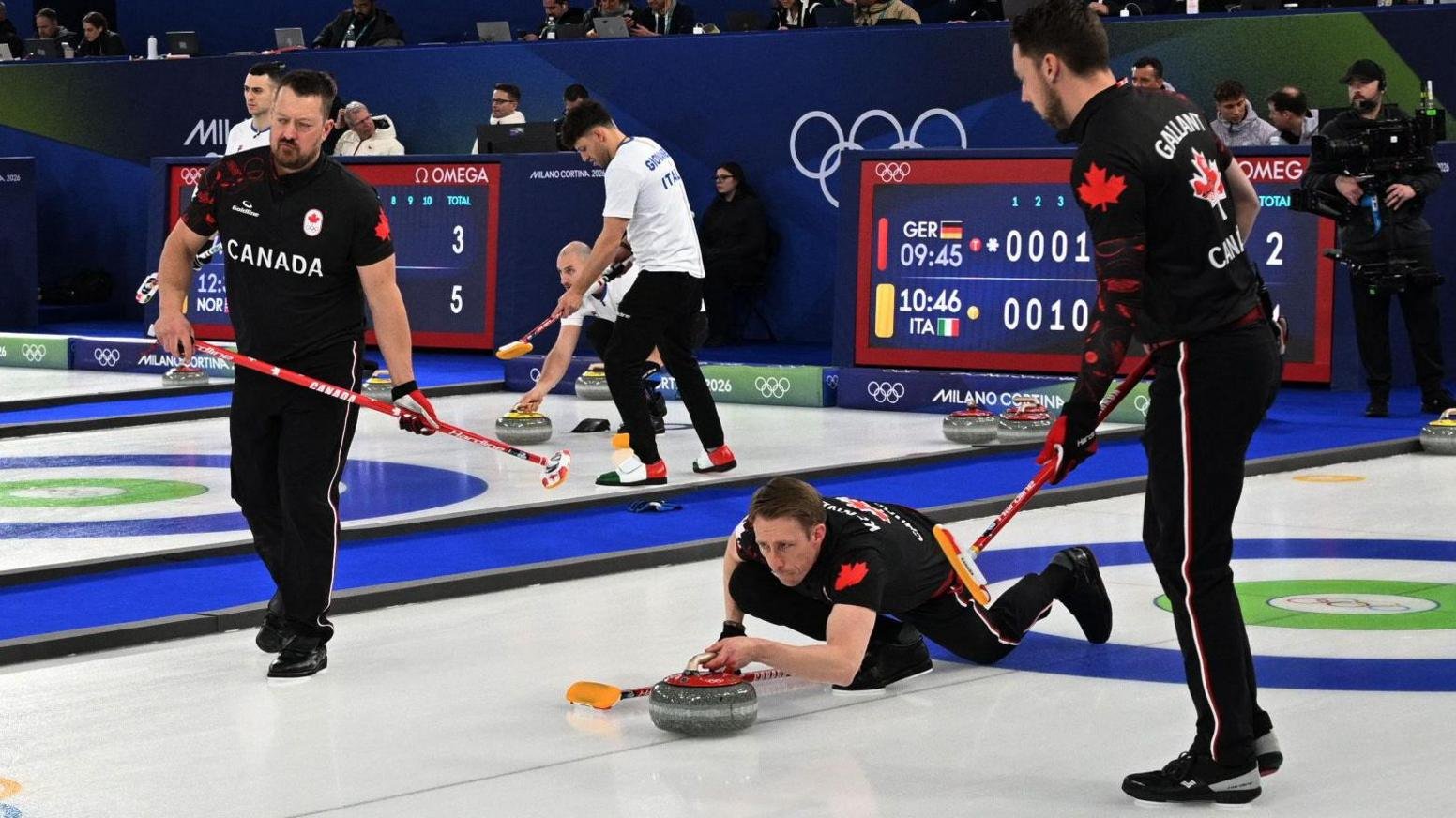
The world of Olympic curling has been rocked by a new controversy, as the Canadian curling team has accused Sweden of Canada curling cheating during a high-stakes Olympic matchup. The allegations center on claims that Swedish players engaged in unauthorized filming, potentially gaining an unfair advantage. This accusation has reignited discussions about Canada curling cheating, raising serious questions about sportsmanship, fairness, and adherence to the strict rules governing international curling competitions.
Tensions between the two powerhouse teams escalated quickly, with both sides issuing public statements addressing the situation. The Canadian team has emphasized that allegations of Canada curling cheating cannot be taken lightly, stressing that any violation of Olympic rules undermines the integrity of the sport. Meanwhile, Sweden has firmly denied the claims, asserting that all team activities complied with international curling regulations.
The emergence of these allegations has brought Canada curling cheating back into the spotlight, prompting analysts, fans, and Olympic officials to examine past instances of rule violations in curling. Experts note that, while controversies are not uncommon in competitive sports, the seriousness of a Canada curling cheating accusation at the Olympic level demands immediate investigation. Curling authorities have confirmed that they are reviewing all evidence, including video footage and eyewitness reports, to determine whether any rules were breached and whether corrective action is necessary.
This latest scandal highlights the challenges of maintaining fair play in elite-level curling and underscores why vigilance against Canada curling cheating is critical. As the investigation continues, the curling community is watching closely, aware that the outcome could set a precedent for how future allegations of Canada curling cheating are handled in international competition. For fans and athletes alike, this incident serves as a reminder of the high stakes involved in Olympic curling and the importance of preserving the integrity of the game.
Background: Canada Curling Team and Olympic Pressure
The Canadian curling team has long been regarded as a powerhouse in international competition, consistently achieving top results at world championships and the Olympic Games. Known for their strategic precision, disciplined play, and ability to perform under pressure, Canada’s athletes have become synonymous with excellence in the sport. However, with such high expectations comes intense scrutiny, and even minor controversies can quickly escalate into debates over fairness and integrity. The recent allegations of Canada curling cheating have once again placed the team at the center of the global curling conversation.
In Olympic competition, where stakes are extraordinarily high, the pressure on athletes is immense. Every strategic decision, every throw, and every sweep is analyzed by opponents, officials, and fans alike. Against this backdrop, accusations of Canada curling cheating ignite passionate debate, with commentators and analysts dissecting the situation and weighing in on the potential consequences. For many observers, the controversy highlights the delicate balance between competitive advantage and ethical conduct, raising questions about how far teams may go to gain an edge without crossing the line into Canada curling cheating territory.
During the recent Olympic matchup with Sweden, Canada’s team faced unexpected challenges that intensified scrutiny. Officials from Canada alleged that Swedish players engaged in unauthorized filming and other actions that could have provided strategic insights into Canada’s gameplay. The Canadian team argued that such behavior, if true, constitutes Canada curling cheating, undermining the spirit of fair competition. These claims have quickly become central to the broader debate on Canada curling cheating, with experts and fans analyzing the rules, potential violations, and implications for the Olympics as a whole.
The allegations underscore the complexity of enforcing fair play in curling, a sport where tactical knowledge, precision, and split-second decision-making are critical. Accusations of Canada curling cheating not only place pressure on the teams involved but also challenge officials to uphold the integrity of the game. As the discussion around this incident continues, it serves as a reminder of the heightened stakes at the Olympic level and the importance of strict adherence to rules designed to prevent Canada curling cheating and protect the credibility of the sport.
The Allegations: Sweden Accused
According to the Canadian curling team, Swedish players were observed using cameras and recording devices in ways that may have violated official Olympic curling regulations. Canada contends that these actions could have provided Sweden with unauthorized tactical information, potentially influencing the outcome of key matches. The Canadian team’s concerns have prompted a formal complaint to Olympic curling officials, emphasizing that any violation of the rules constitutes serious Canada curling cheating.
The alleged Canada curling cheating incident specifically involves the collection and use of strategic gameplay information, which could unfairly benefit one team over another. Evidence submitted to the authorities includes video footage, eyewitness reports, and detailed logs from Canadian officials documenting the potential breach. Olympic regulators are now reviewing the claims to determine whether any of the actions by Sweden meet the criteria for Canada curling cheating under international rules.
Sweden has officially denied the allegations, asserting that their team’s conduct fully complied with all Olympic regulations. Swedish representatives argue that the accusations of Canada curling cheating are unfounded and may stem from misinterpretations of routine practice or legitimate observational methods. Despite these denials, the controversy has intensified discussions about fair play, highlighting the fine line between strategic observation and Canada curling cheating.
This clash has reignited debate among fans, analysts, and the broader curling community about the prevalence and detection of Canada curling cheating in elite competitions. Experts note that enforcing fair play in highly competitive international sports is challenging, especially when technology and information-gathering tools are involved. The current allegations demonstrate how even subtle breaches can lead to serious accusations of Canada curling cheating, potentially affecting not only match results but also the reputation of teams and the credibility of the sport as a whole.
As Olympic authorities continue their investigation, the curling world remains focused on determining whether the Swedish team’s actions constitute Canada curling cheating, underscoring the ongoing need for strict enforcement, clear guidelines, and vigilance to maintain fairness in international competitions.
Expert Opinions on Canada Curling Cheating
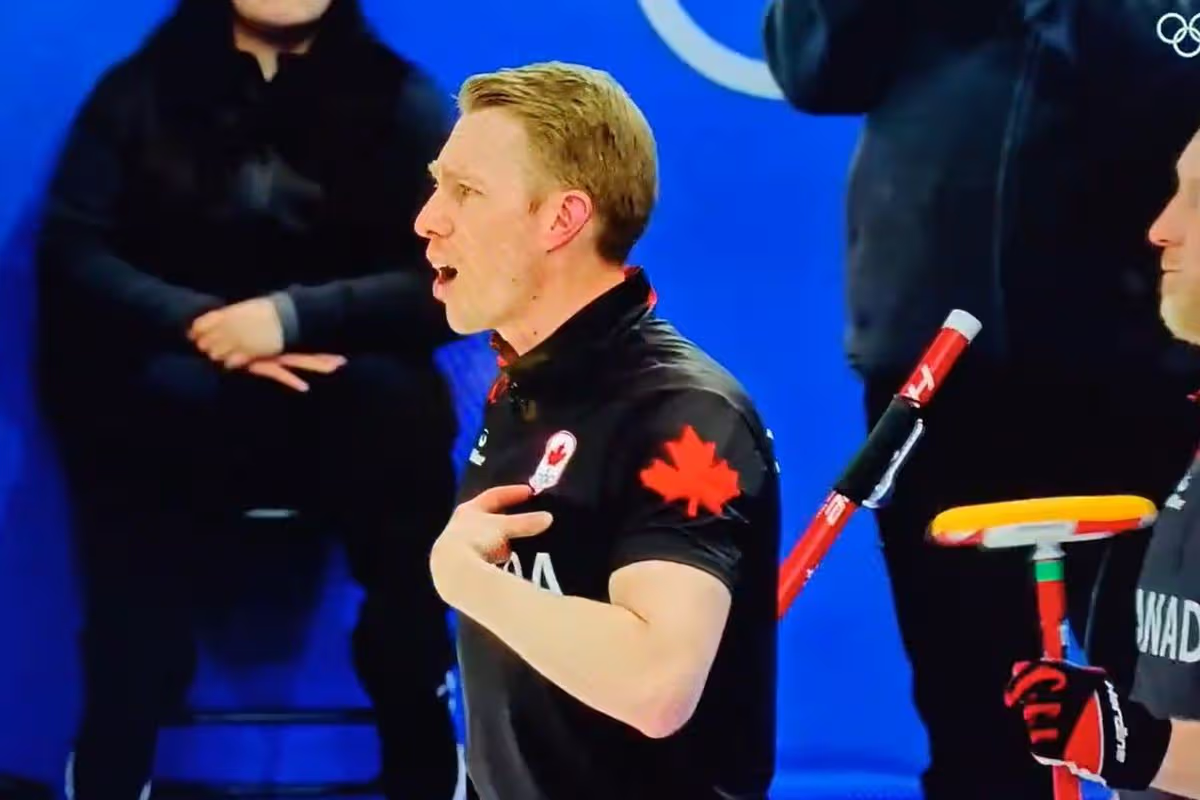
Sports analysts and curling experts have closely examined the latest allegations, offering a variety of perspectives on the controversy. Many commentators suggest that tensions are inherently high at the Olympic level, and disputes over Canada curling cheating can arise simply due to the competitive pressure and intensity of the matches. In this view, accusations of Canada curling cheating may reflect heightened scrutiny rather than deliberate misconduct.
However, other experts warn that even the perception of Canada curling cheating can have serious consequences for the sport. Curling relies heavily on trust, sportsmanship, and strict adherence to rules, and any confirmed breach—whether through unauthorized filming, tactical information gathering, or other violations—could significantly undermine public confidence in Olympic competition. Analysts note that allegations of Canada curling cheating must be taken seriously, as they affect not only the teams involved but also the reputation of international curling as a fair and honorable sport.
Experts emphasize that thorough investigation of all Canada curling cheating claims is essential. Transparency is a cornerstone of Olympic integrity, and authorities must carefully review evidence, including video footage, eyewitness accounts, and official reports. This ensures that any determination regarding Canada curling cheating is based on facts and not speculation. Maintaining clear and consistent enforcement of rules deters potential violations and reinforces the principle that no team, including Canada or Sweden, should gain an unfair advantage.
Several analysts also highlight the broader implications of the controversy. Allegations of Canada curling cheating can prompt governing bodies to re-evaluate policies on equipment, observation, and information collection. In some cases, these discussions lead to stronger regulations and improved monitoring systems to prevent similar disputes in the future. For athletes and fans alike, understanding the seriousness of Canada curling cheating helps preserve the spirit of fair competition and ensures that Olympic curling remains a respected sport worldwide.
Historical Context: Previous Canada Curling Cheating Controversies
This is not the first time that the international curling community has confronted allegations of Canada curling cheating. Throughout the history of competitive curling, several incidents have raised concerns about fairness and adherence to the rules. Understanding this historical context helps explain why the current accusations against Sweden are being taken so seriously by Canadian officials, Olympic authorities, and curling fans.
Past Canada curling cheating controversies have ranged from equipment violations to breaches of conduct, each challenging the integrity of the sport. For example, some teams were found to have used unauthorized modifications to their curling stones or brooms, providing subtle advantages that were considered curling cheating under official rules. Other incidents involved players engaging in unsportsmanlike behavior or circumventing procedural regulations, prompting warnings and disciplinary action from governing bodies.
Breaches involving filming or video monitoring also feature prominently in the history of Canada curling cheating allegations. Teams have occasionally attempted to record opponents’ strategies or analyze gameplay in ways that contravene established Olympic regulations. Such violations are taken seriously because they can directly impact the fairness of competition and lead to disputes reminiscent of the current claims of curling cheating against Sweden.
Learning from these past controversies, Olympic officials have developed stricter monitoring and enforcement protocols to prevent the recurrence of curling cheating. Measures include more rigorous equipment checks, clear guidelines for player conduct, and tighter controls on filming and observation during matches. These policies are designed to protect the integrity of curling competitions and ensure that all allegations of curling cheating are investigated thoroughly and transparently.
The recurrence of Canada curling cheating controversies underscores the high stakes of Olympic curling, where even minor advantages can influence outcomes and spark debates among teams and fans alike. By addressing historical incidents and applying lessons learned, authorities aim to mitigate the risk of future curling cheating, uphold the credibility of the sport, and maintain trust in the Olympic competition.
As the investigation into the current curling cheating allegations continues, the sport’s governing bodies remain committed to enforcing rules consistently, drawing on historical precedents to guide their decisions and ensure that all teams compete on a level playing field.
Rules and Regulations on Filming in Curling

The Olympics enforce strict regulations regarding filming and observation during curling matches to ensure fair competition and prevent any form of curling cheating. Unauthorized recording, whether by cameras, mobile devices, or other technological means, is strictly prohibited. According to Olympic curling rules, any recording that could provide a competitive advantage or influence gameplay is considered a serious breach, and allegations of curling cheating in this context are treated with the utmost gravity.
Officials emphasize that adhering to these filming restrictions is essential for maintaining the integrity of the tournament. Any team found to be recording opponents or using unauthorized visual aids could face severe consequences, including formal penalties, match forfeitures, or disqualification. Such actions, if proven, are classified as curling cheating because they provide an unfair advantage and compromise the principles of sportsmanship that the Olympics uphold.
The current allegations against Sweden have brought this issue into sharp focus, as the Canadian curling team claims that unauthorized filming occurred during key Olympic matchups. This incident highlights how even subtle deviations from the rules can be considered curling cheating and can trigger extensive investigations by Olympic officials. By enforcing these regulations, authorities aim to prevent the recurrence of curling cheating and ensure that all teams compete on an equal footing.
Beyond the enforcement of penalties, the rules regarding filming also serve an educational purpose. Athletes, coaches, and support staff are reminded regularly that any attempt to circumvent these regulations may be viewed as Canada curling cheating. This includes recording opponents’ strategies, sweeping patterns, or stone placements with the intent of gaining insight that could influence competitive outcomes. Officials note that awareness of these rules is a critical part of preparing teams for Olympic competition and protecting the reputation of the sport.
Furthermore, the presence of Canada curling cheating allegations reinforces the need for transparency and monitoring at all levels of competition. Olympic authorities are increasingly adopting technological solutions to detect and prevent rule violations, such as controlled camera setups, official oversight of practice sessions, and strict enforcement of penalties for any breach. These measures help to safeguard against Canada curling cheating and maintain public confidence in the fairness and legitimacy of Olympic curling events.
Ultimately, adherence to filming restrictions is central to preventing Canada curling cheating and preserving the competitive integrity of the Olympics. By ensuring that all teams understand the rules and enforcing them consistently, authorities reinforce that curling, like all Olympic sports, must be contested fairly, ethically, and with respect for the rules governing international competition.
Response from Canada and Sweden
The Canadian curling team has issued a formal statement highlighting the gravity of the Canada curling cheating allegations and the potential impact on Olympic competition. Officials stressed that maintaining fairness and transparency is essential to the spirit of the Games, and any actions that compromise this—such as unauthorized filming or strategic data collection—constitute serious curling cheating. The statement emphasized that the Canadian team is committed to following proper protocols and ensuring that all competition remains equitable, while firmly requesting that allegations of curling cheating be thoroughly investigated.
Canada’s statement also underscored the importance of accountability. By publicly addressing the curling cheating allegations, the team aims to draw attention to the necessity of enforcing rules consistently across all competitors. They argued that ignoring potential violations would set a dangerous precedent and risk undermining confidence in Olympic curling. The Canadian team called on officials to examine all available evidence, including video footage, witness reports, and match data, to determine whether the Swedish team engaged in curling cheating.
In contrast, Sweden has publicly denied any wrongdoing and refuted the curling cheating claims. Swedish officials asserted that all filming and observation activities conducted during the Olympic matches complied fully with international curling regulations. They emphasized that accusations of curling cheating were unsubstantiated and misrepresented routine practices designed to analyze gameplay within the bounds of Olympic rules. Sweden’s response has further fueled media coverage, highlighting the conflicting narratives between the two teams in the ongoing Canada curling cheating controversy.
The contrasting statements from Canada and Sweden have intensified fan and media debate. Social media platforms, sports forums, and news outlets have all become arenas for discussing Canada curling cheating, with analysts breaking down the allegations, reviewing previous incidents, and examining potential consequences for both teams. The dispute underscores how allegations of Canada curling cheating can extend beyond the ice, impacting public perception, fan engagement, and the reputation of Olympic curling as a fair sport.
Experts note that while investigations into Canada curling cheating are ongoing, the incident serves as a reminder of the importance of clear regulations, rigorous enforcement, and open communication between teams and governing bodies. The situation highlights the delicate balance required to prevent unfair advantages and maintain the integrity of international curling. Whether or not the allegations of Canada curling cheating are ultimately substantiated, the dispute has already reinforced the need for vigilance and transparency in Olympic competition.
By addressing the allegations openly, both teams have highlighted the broader implications of Canada curling cheating on sportsmanship, international relations, and the credibility of curling as an Olympic sport. Authorities, athletes, and fans alike are watching closely, as the outcome of this investigation may shape how similar allegations of Canada curling cheating are handled in the future and ensure that all competitors adhere to the principles of fair play.
Social Media and Public Reaction
Fans around the world have weighed in, with many taking sides in the Canada curling cheating controversy. Social media platforms have exploded with discussions, highlighting:
- Reactions to alleged filming violations
- Debates over fair play and sportsmanship
- Historical comparisons to prior curling cheating incidents
The conversation demonstrates how seriously fans and the public take allegations of Canada curling cheating in Olympic competition.
Potential Consequences of Curling Cheating
If the allegations are proven, consequences could include:
- Official sanctions against Sweden
- Possible overturning of match results
- Heightened scrutiny of all Olympic curling matches
- Increased enforcement of rules to prevent future curling cheating
For Canada, confirming the legitimacy of these claims is essential to maintaining trust in the Olympic curling community.
Maintaining Integrity in Olympic Curling
The curling cheating controversy highlights the importance of rules, regulations, and ethical conduct. International curling authorities are now reviewing evidence to ensure that no unfair advantage was gained.
Experts stress that strict enforcement is necessary to prevent Canada curling cheating in the future, protecting both athletes and the sport’s reputation.
How Athletes Can Avoid Canada Curling Cheating Accusations
Athletes are encouraged to:
- Understand and follow all Olympic rules regarding filming
- Avoid practices that could appear as Canada curling cheating
- Maintain transparent communication with officials
- Report any suspicious activity observed during matches
By adhering to these guidelines, teams can prevent allegations of Canada curling cheating and ensure fair competition.
International Implications of Canada Curling Cheating
The controversy has implications beyond Canada and Sweden, as it raises awareness of potential curling cheating scenarios in other nations. Olympic committees may tighten monitoring, auditing, and enforcement to avoid future disputes.
The latest allegations have put curling cheating in the global spotlight. While investigations continue, both fans and officials are reminded that upholding integrity, fairness, and transparency is paramount in Olympic sports.
Whether the accusations are ultimately confirmed or dismissed, the incident serves as a cautionary tale about Canada curling cheating and the importance of rigorous adherence to rules, ethical conduct, and respect between competitors.